


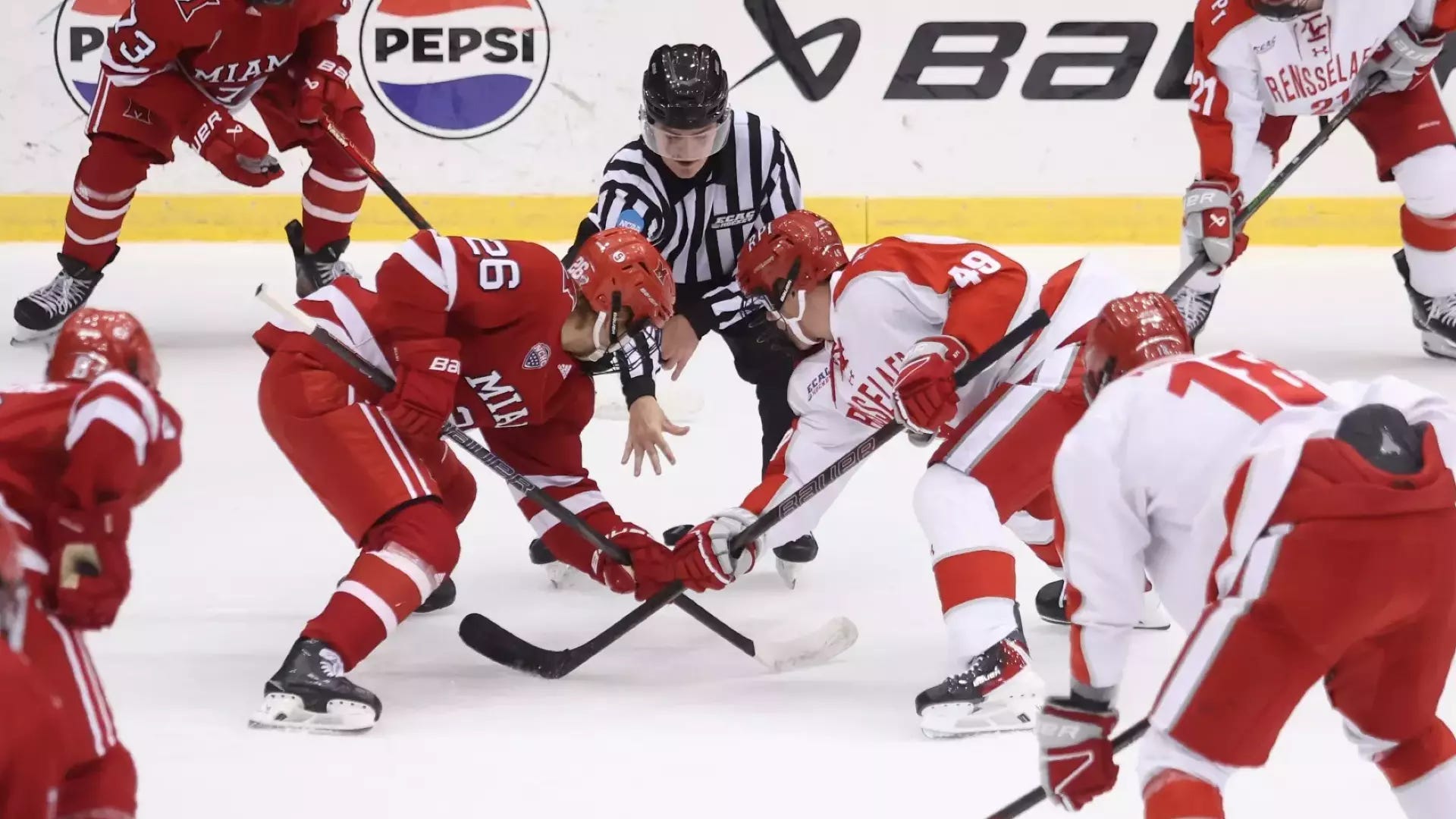
The Engineers have hit the ice 6 times officially so far, and the results have been far from what they’re looking for. Since the 2nd period of the first game, they have 5 goals in 5+ games, have struggled to keep the puck out of their own net, and have the worst statistical penalty kill in the country. At the end of the day, there are two things that matter in this game. How many you score and how many you give up, it’s as simple as that. But hockey analytics have gotten a lot more complex in the past 10 years, and a deeper look at the numbers show that this is nowhere near as bad as it looks. We’re going to comb through some numbers here and show that a regression to the mean feels very inevitable and RPI has been quite unlucky.
Analytics aside, RPI has played 3 ranked opponents, and their only unranked opponent is 6-0. We were pretty upfront on the blog that the early stretch could be rough, and unfortunately that has been the case. It is true however, that RPI was never going to be an at-large NCAA bid, so what did it really matter if they challenged themselves against BC or rolled over weak Atlantic teams. The results have been frustrating, but let’s parse through the data to take a more measured look at RPI’s start.
Bad Results, But Fine Expected Numbers

Chris: RPI has on average lost by 3 goals of a game, but their NxG (net expected goals) is just -0.33. Meaning, analytics that track high danger scoring chances, possession, etc. suggest that they should basically be give or take a 2-4-1 team against the toughest schedule in college hockey.
For those that are skeptical of what the numbers, think of it this way. Your net expected goals metric basically aggregates how well your skaters do at possessing the puck and the chances they develop from the places on the ice they put the puck/allow it to go. It is the best baseline to understand how a team should perform on any given night. But, there is a reason elite goal scorers like Alex Ovechkin have made careers out of burying the chances they receive. There are also reasons that goaltenders like Henrik Lundqvist are coveted, because they can carry bad teams to amazing heights. More to come on that later….
I view the proximity of net expected goals against this quality of schedule as an incredibly bullish indicator of what Coach Lang can do. In the past, RPI was perpetually out chanced and their xGA sat in the mid 3s consistently against weaker opponents. Old school fans will say that RPI’s defense looks porous thus far, but to see an expected goals against number of 2.7 against this quality of opponent suggests that Lang’s defense and possession models work incredibly well. It is also a positive indicator that this young core of defenders has a lot of potential and could get really good here.

Similar story here with chances, RPI is only getting outshot on average by 5 per night against this quality of schedule. That is a drastic improvement from years past, and shows that with more scoring talent and better goaltending, RPI will be very well setup.
OK… If everything is so great, why are they getting blown out?
Well, the goaltending has been bad. And, they haven’t finished almost any of their chances. Like I said, expected numbers are a fine “mean” to follow, but they don’t really matter if you finish less of your chances than you allow.
To me, underlying’s speak more to the quality of the system, whereas finishing and goaltending is reliant on the talent of the players in your system. I’d rather be excited about this new style of play seeming to work so far than a grad transfer who we may only have for 1 year. It just feels more sustainable now. But in the near-term, what does RPI need to correct so that this season isn’t lost?
Brendan: One number that really gives some context here is PDO. PDO is a team’s save percentage plus their shooting percentage. The Engineers have a PDO of 91.1% (4.7% shooting percentage + 86.4% save percentage). That is the lowest in the country.
At the college level, the majority of teams finish the season with a PDO between 97 and 103, so there is reason to believe that the Engineers have just had bad puck luck to start the season. They won’t have a PDO of 91 come March.
For reference, here’s how this season compares to the previous two. The underlying improvements (xG For %) are being masked by the fact the team is shooting at 4.7%.

We just need to have a little patience here, the goals will start to come.
Wallace-Sitar-Buckley… Top Line of the Future?

Chris: RPI has the makings of an exciting line, and better yet, they have a ton of eligibility left. Matthew Buckley has stood out to me as the most exciting young player (Sobieski makes an argument), and he has teamed up quite well with Filip Sitar and Tyler Wallace. Wallace plays the power forward type of role, Sitar the playmaker (although he has been the goal scorer so far), and Buckley the lethal scorer. These guys have all carried play very well and really been the only line generating action for RPI so far.